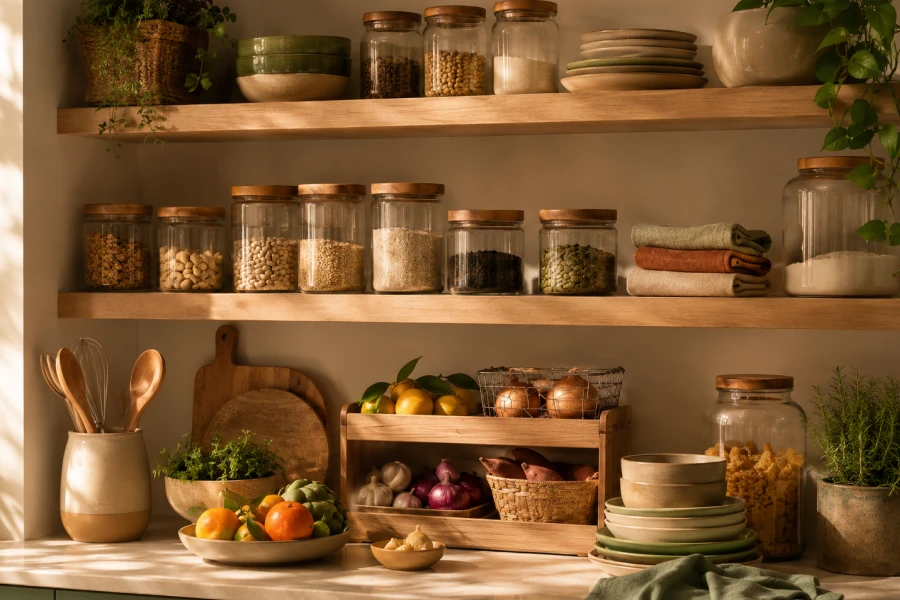
Kitchen storage solutions can change how a home feels every day. A cluttered kitchen makes simple cooking feel heavier. Cabinets become crowded, counters disappear, and ingredients hide behind duplicates. Better storage gives each item a clear place. It also helps the room support real cooking habits. You do not need a perfect kitchen to feel organized. You need zones, visibility, and practical systems. Small changes can improve every meal. The goal is not showroom perfection. It is a cooking space that feels calm, useful, and easy to reset.
Zones make storage easier because they match behavior. Coffee supplies belong near the coffee maker. Baking tools belong near mixing bowls. Everyday plates need the easiest reach. This seems simple, but many kitchens ignore flow. A pantry organization system works better when it connects to how you cook. You spend less time crossing the room. You also notice missing items sooner. Good zones reduce visual noise. They make the kitchen feel more cooperative.
Counters carry the emotional weight of the kitchen. When they are crowded, the whole room feels unfinished. Removing rarely used items creates immediate relief. Keep only daily tools in view. Store backup appliances where they do not interrupt prep space. A cooking space reset can begin with one counter section. Clean space gives you room to chop, plate, and think. It also makes the kitchen easier to clean after dinner. The room feels lighter. Cooking starts with less resistance.
Cabinets need visibility as much as capacity. Deep shelves often hide useful items. Risers, bins, and turntables can bring things forward. Drawer dividers also prevent small tools from spreading everywhere. Group items by task, not by vague category. Measuring tools should sit near mixing tools. Pot lids need a system that does not collapse. Storage becomes easier when each choice solves a daily annoyance. You are not adding products for decoration. You are removing friction from cooking.
Vertical space often goes unused in small kitchens. Wall rails, shelf risers, and cabinet door racks can help. The key is restraint. Too much exposed storage becomes visual clutter. Choose vertical solutions for items you reach often. Keep heavy tools low for safety. Place lighter tools higher when needed. A practical layout protects both movement and appearance. The kitchen should feel efficient, not crowded. Smart height choices create space without overwhelming the room.
Food storage improves when ingredients are visible and grouped. Grains, snacks, spices, and baking items need clear homes. Labels help, but placement matters more. Put frequently used ingredients where eyes naturally land. Move rare items higher or farther back. A food storage zones approach prevents accidental duplicates. It also makes meal planning faster. You can build dinners around what you already own. Freshness improves because items stop disappearing. The pantry becomes part of the cooking process.
Maintenance should be quick, or it will not happen. Set a weekly ten-minute reset. Return stray tools to their zones. Toss expired food before shopping. Wipe one shelf instead of emptying the whole pantry. Use pro kitchen habits to keep systems alive. The goal is small consistency, not dramatic weekend overhaul. Organized kitchens stay organized through repeated tiny actions. Every reset protects the work you already did. Calm becomes easier to maintain.


Leave a comment