
AI kitchen organization tips can turn a messy kitchen problem into a clearer plan. They are especially helpful when you feel stuck. You might know the kitchen needs change, but not where to start. AI can suggest zones, storage ideas, and reset routines. It can also help prioritize problems by urgency. The best results come from detailed prompts. Describe your layout, habits, pain points, and storage limits. Then use the suggestions as a draft. Your judgment still matters most. Technology works best when it supports real household behavior.
Specific prompts produce better organization ideas. Tell AI whether your kitchen is small, open, narrow, or rental-friendly. Mention cabinet depth, pantry size, and counter problems. Add what annoys you most during cooking. A small kitchen solutions prompt works better with measurements. You can also list what you refuse to change. That keeps suggestions realistic. AI should not invent space you do not have. It should help you use existing space more intelligently. Clear input creates useful output.
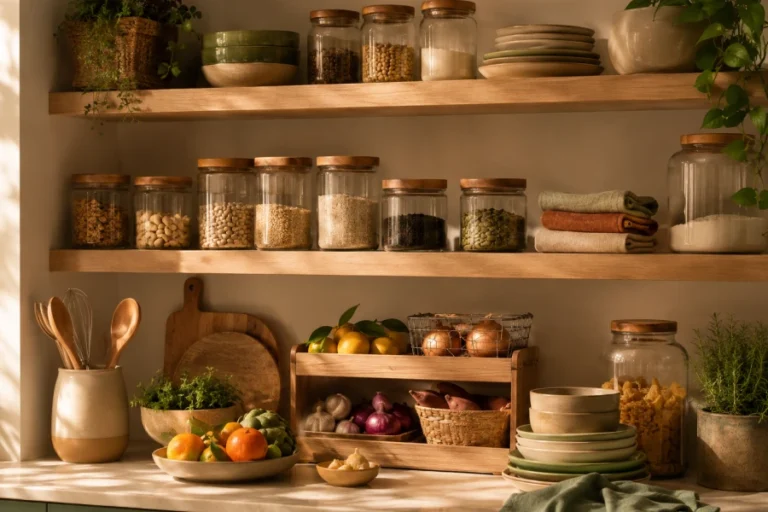
AI often becomes most useful when asked for zones. Request a prep zone, cooking zone, pantry zone, and cleanup zone. Then ask what should live inside each one. This turns a cluttered room into smaller decisions. A countertop control plan can also come from that structure. You might keep only coffee, knives, and a fruit bowl visible. Everything else gets assigned a home. The system feels calmer because it has logic. You are not chasing perfection. You are building flow.
Daily resets keep organization from fading. Ask AI to create a five-minute closing routine. Include dishes, counters, trash, and food storage. Request a version for exhausted nights. That detail makes the routine realistic. You can also ask for a weekend reset that takes twenty minutes. Strong routines protect the kitchen from slow clutter. They also make mornings feel better. A clean start changes how cooking feels later. Small repeated actions matter more than dramatic projects.
If you use tools that support images, photos can improve the advice. Show one cabinet, drawer, or counter at a time. Ask what categories are visible. Request three practical improvements. Avoid asking for a full kitchen makeover first. Smaller questions produce clearer answers. You can test one suggestion before moving forward. This prevents overwhelm. It also keeps the project grounded. The best improvements often start in one messy drawer.
AI can help prevent unnecessary organizer purchases. Ask what problem each storage item should solve. Request low-cost alternatives before buying bins. Compare drawer dividers, shelf risers, and turntables by use case. A kitchen storage ideas list becomes stronger when it includes constraints. Tell AI your budget and style preference. Ask which items will make the biggest difference first. This keeps the project efficient. Organization should save effort, not create more shopping. Smart buying protects your space.
The final step is editing suggestions for your home. AI may recommend labels you dislike. It may suggest containers that do not fit. It may assume habits your family does not have. Treat each answer as a starting draft. Keep what solves a real problem. Ignore what adds maintenance. A AI organizing ideas approach works only when it stays human. The kitchen should support your cooking style. Personal fit is what makes the system last.



Leave a comment