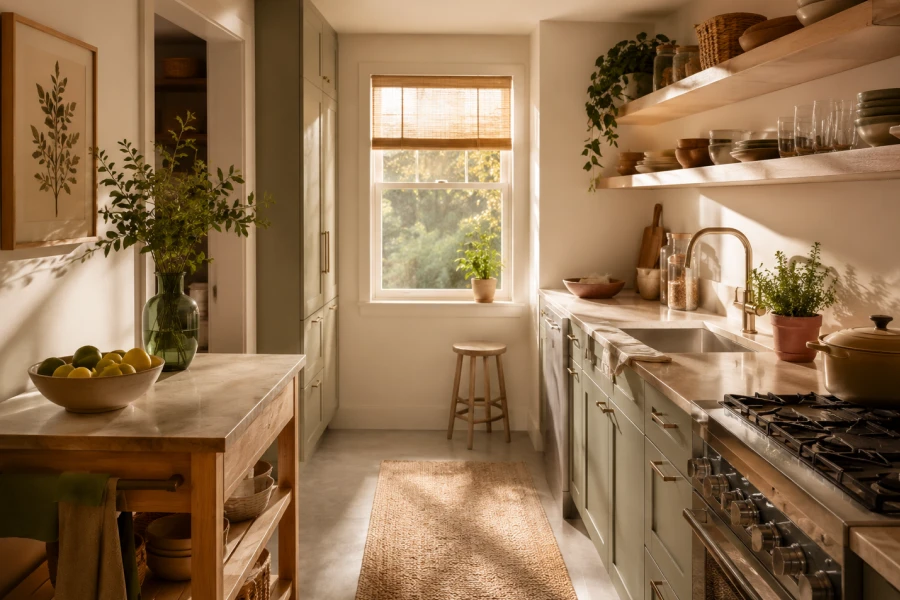
Kitchen organizing strategies matter most when space feels limited. Small kitchens can work beautifully with the right structure. The problem is rarely only square footage. It is usually unclear placement, crowded surfaces, and forgotten storage. A thoughtful system helps every shelf earn its place. It also makes cooking feel less cramped. You begin by removing what does not support daily life. Then you place essentials where movement feels natural. A small kitchen can become surprisingly generous. The right choices make space feel larger before anything is remodeled.
Editing is the fastest way to create space. Most kitchens hold duplicate gadgets, mismatched containers, and expired ingredients. Removing those items immediately changes the room. You do not need to throw away everything. You need to decide what deserves daily space. A clutter-free kitchen begins with honest choices. Keep tools that match how you actually cook. Move occasional items to secondary storage. Let go of things that only create guilt. Space returns when the kitchen reflects real habits.
Placement should follow the path of cooking. Prep tools belong near cutting boards. Oils and seasonings belong near the stove. Plates should sit near the serving area. This reduces unnecessary movement in tight spaces. A kitchen workflow planning mindset makes every drawer more useful. You stop storing items by category alone. Instead, you store them by use. That simple shift creates a smoother room. Cooking starts feeling less interrupted. Small kitchens especially benefit from this logic.
Hidden storage works best when it stays easy to access. Cabinet doors can hold wraps, lids, or spices. Narrow bins can organize awkward shelves. Stackable containers can save pantry space. The important part is keeping categories simple. Overly complex systems collapse quickly. Use storage tools only when they solve a specific problem. Avoid buying organizers before editing. A crowded cabinet with new bins is still crowded. Good hidden storage should feel intuitive.
Open surfaces influence how large the kitchen feels. A clear counter makes the room appear wider. A clear table invites use instead of avoidance. Remove visual clutter first. Then decide which objects deserve display. Keep decorative items minimal and practical. A bowl of fruit can work better than three small accessories. The eye needs places to rest. That rest creates the feeling of space. The kitchen becomes easier to enter and enjoy.
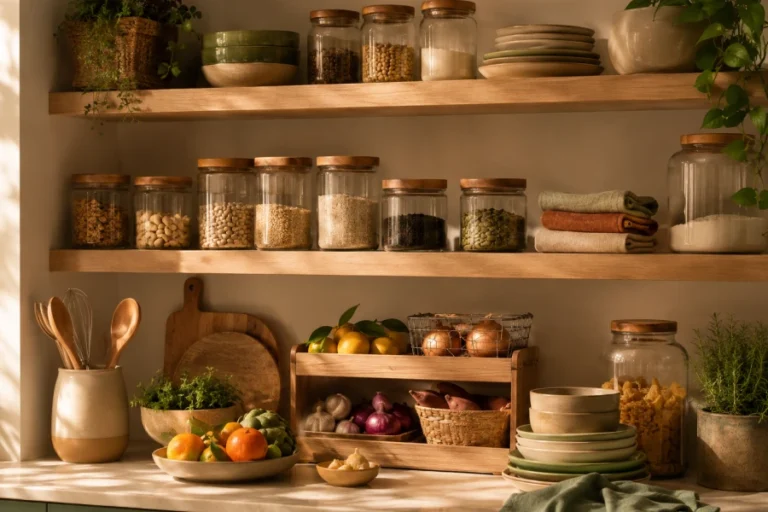
A pantry should help you cook, not confuse you. Group ingredients by meal type or cooking purpose. Keep breakfast, baking, snacks, and quick dinners separate. Put newer items behind older ones. Store open packages in clear containers only when useful. A smart cabinet layout helps pantry choices stay visible. You waste less food when you can see options. You also build meals faster. Pantry confidence changes daily cooking. It makes the kitchen feel prepared.
The strongest system is easy to restore. Every item needs a home that makes sense. If storage feels awkward, people will ignore it. Test your system for one week. Notice what keeps landing on the counter. That object probably needs a better place. Use drawer organization tips for small items that wander. Adjust without blaming yourself. Organization improves through observation. A kitchen becomes spacious when maintenance feels natural.

Leave a comment